

Nearly 100 client projects since 2011 · more than 500 LiteX-M2SDR boards shipped · LiteX used in industry and academia
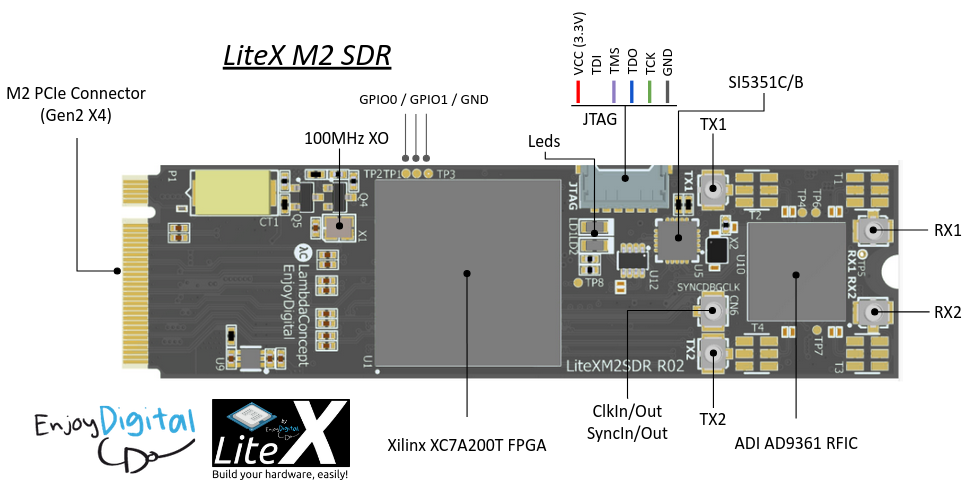
LiteX-M2SDR
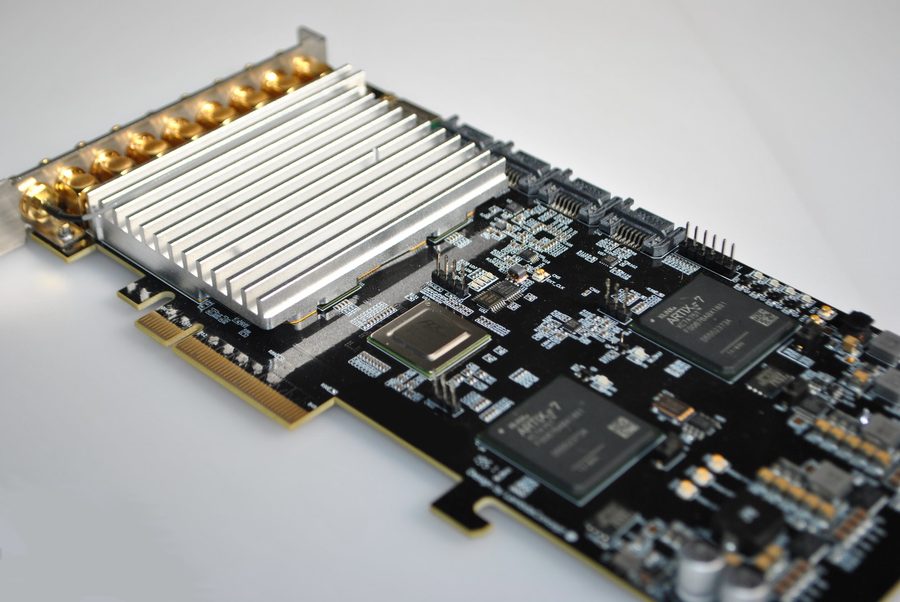
An SDR board in M.2 format: Analog Devices AD9361 (2T2R, 70 MHz to 6 GHz) and AMD/Xilinx Artix-7 XC7A200T FPGA, over PCIe Gen2 x4, Ethernet or SATA, with USB3 in progress. The gateware, Linux driver, C API and SoapySDR support are open source. Hardware designed with our partner LambdaConcept.
What we do
For clients
- Gateware & cores
- FPGA designs and reusable cores, written to be read, tested and maintained.
- Drivers & software
- Linux drivers, C APIs and tools, so the hardware is usable from day one.
- Bring-up & validation
- Getting new boards alive, debugging signal and timing issues, proving it on hardware.
- Help with your design
- Reviews, verification and support for your own team.
PCIe, 1/10/25G Ethernet, USB3, SATA and NVMe, DRAM, JESD204B, SDR, video. AMD/Xilinx, Intel/Altera, Lattice, Gowin and Efinix FPGAs.
Products
- LiteX-M2SDR
- SDR board in M.2 format, AD9361 and Artix-7, with open-source gateware and software. Also the starting point for custom client variants.
- LiteX-Acorn-Baseboard Mini
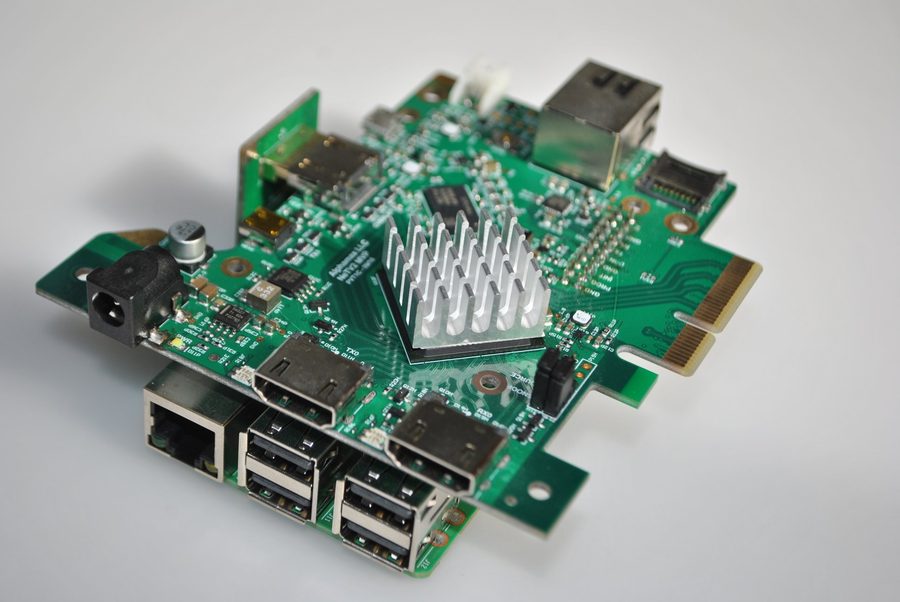
- A carrier for M.2 FPGA cards: PCIe x1, 2× SFP, SATA, USB-C JTAG/UART.
Recent work
More on the blog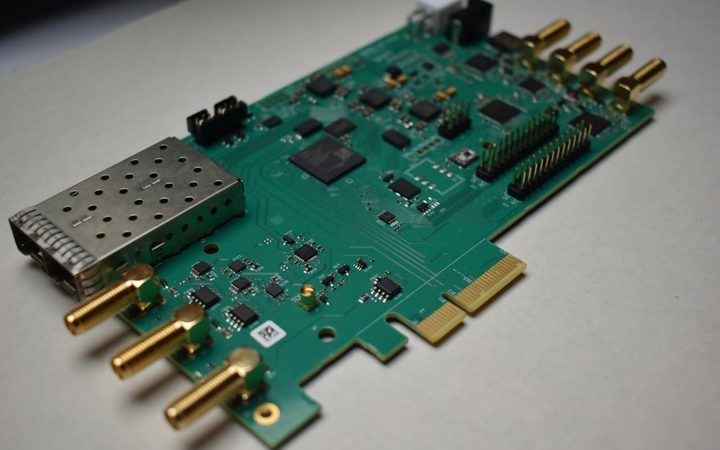 LiteX-WR-NICA White Rabbit PCIe NIC on the SPEC-A7 board, with sub-nanosecond synchronization over Ethernet and PCIe PTM. Open source end to end.
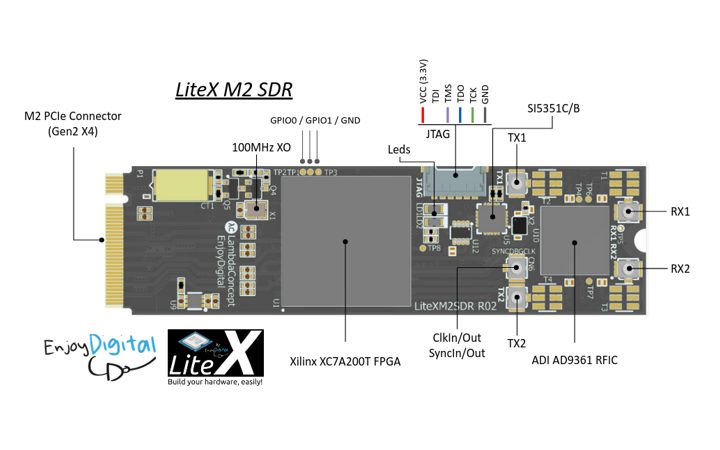 LiteX-M2SDROur SDR board, with PCIe, Ethernet and SATA links, and USB3 in progress.
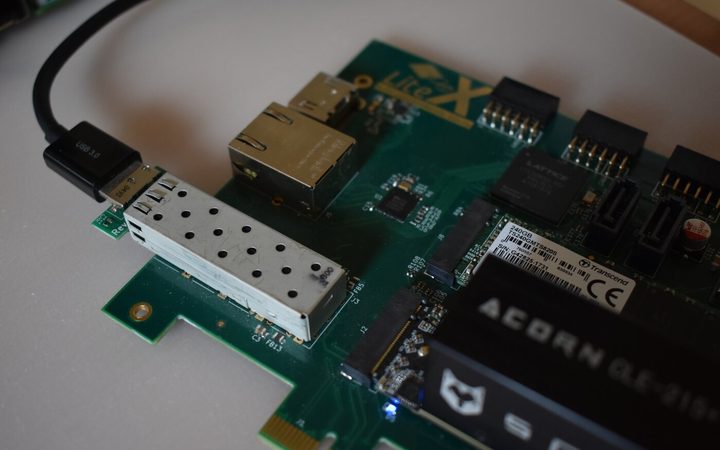 USB3-PIPEUSB 3.2 on FPGA transceivers, at 5 and 10 Gbps, on AMD and Gowin FPGAs, with no external USB chip.
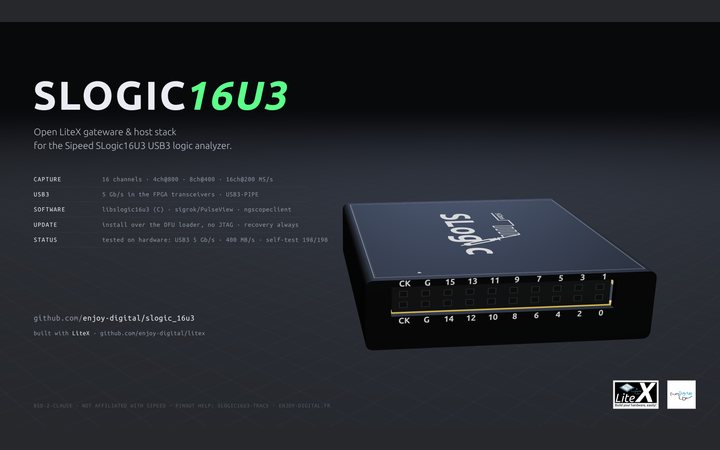 SLogic16U3Open gateware and host software for the Sipeed SLogic16U3 USB3 logic analyzer.
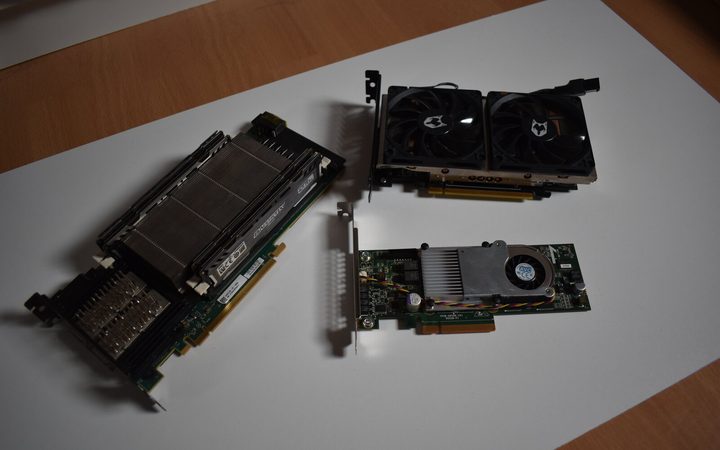 TriXiumTernary large language models running entirely on second-hand FPGA cards.
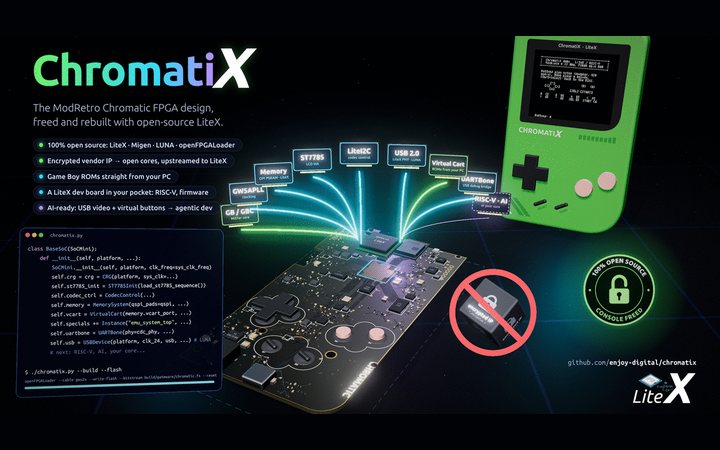 ChromatiXThe ModRetro Chromatic handheld's FPGA design, rebuilt into an open LiteX design.
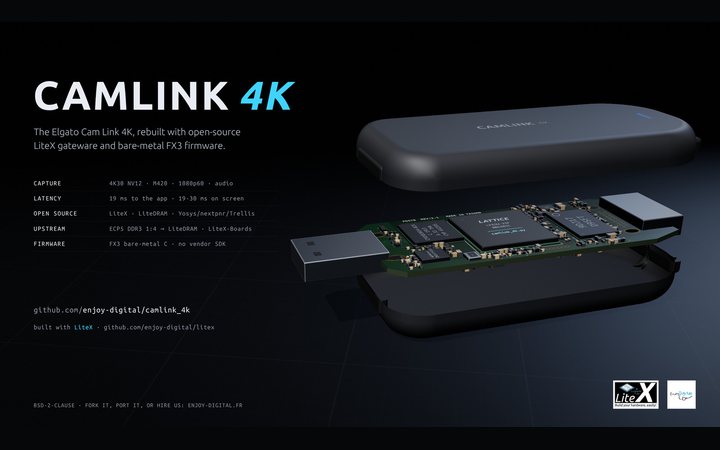 CamLink 4KOpen gateware and firmware for the Elgato Cam Link 4K, built with the fully open ECP5 toolchain.
Client systems
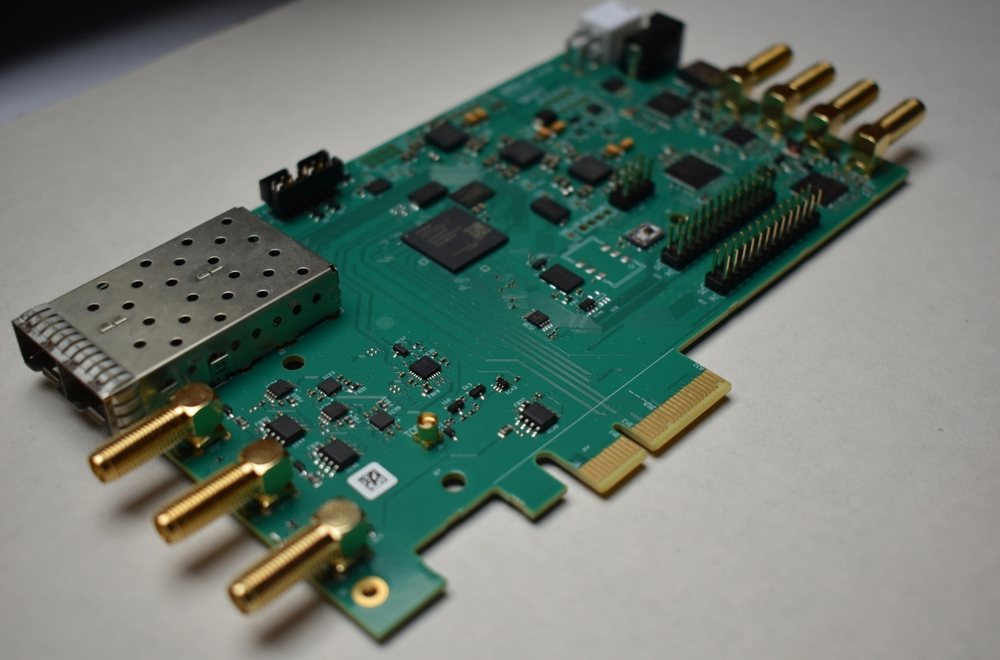
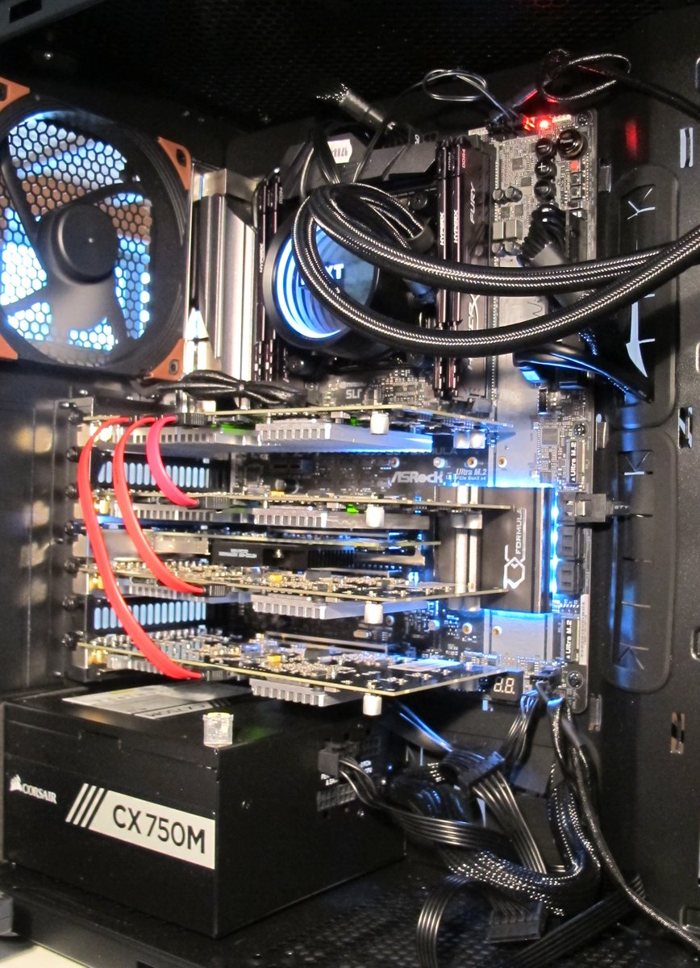
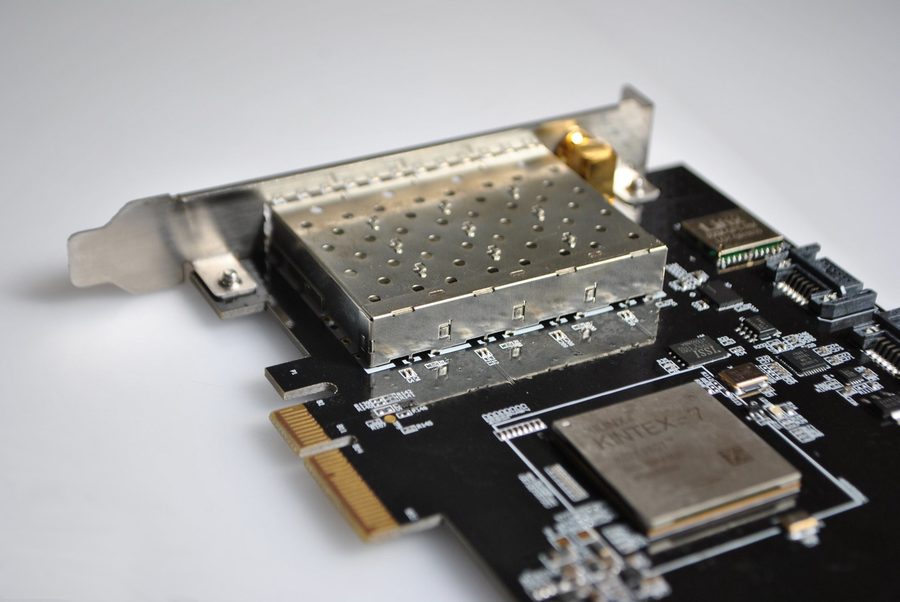
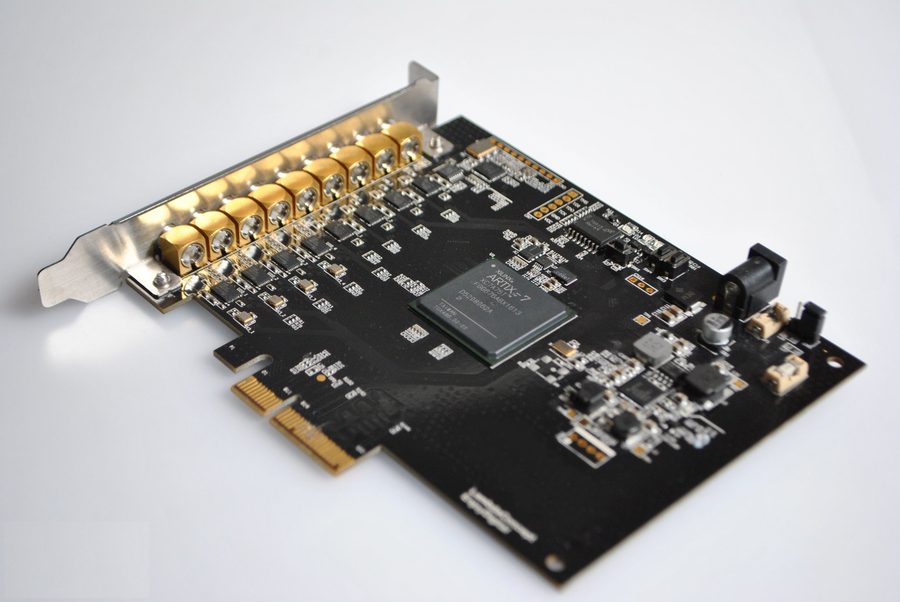
Some of our clients

// how we work
Keep it simple
We aim for designs that are minimal, easy to understand and portable, so your team can read, maintain and reuse them long after the project.
Simple and minimal
Only what the system needs: readable code, few dependencies, no unnecessary layers.
Easy to understand
Documented and tested designs, written so that someone else can take them over.
Portable
Built with LiteX, designs are easier to move between FPGA vendors and boards, and to keep alive as tools change.
AI where it helps
We also use AI agents to help with complex tasks and to automate tests and research, with local language models on our own server for confidential work.
Have an FPGA project in mind?
Tell us about it, and we'll tell you honestly whether and how we can help.